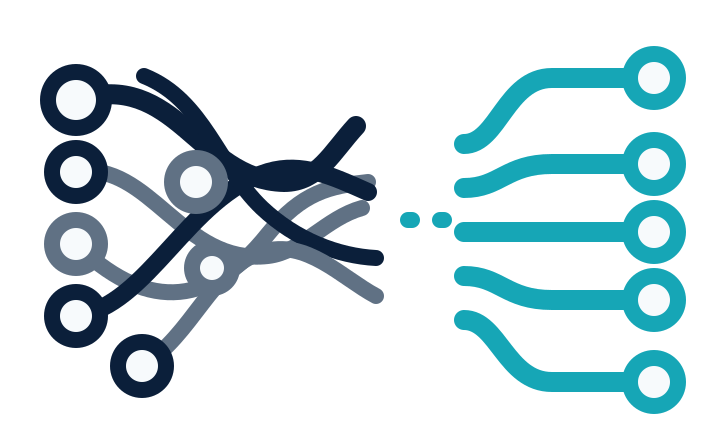
Collection stays local
The collector is run inside the client environment. It does not require inbound access from a hosted service.
Process
TangleMap separates collection from interpretation. The client-side collector creates an encrypted evidence bundle; analyst-local tooling turns it into the inventory, dependencies, caveats, scoring, and recommendations needed for a modernization readout.
Collection
Evidence
Complexity
Findings
Roadmap inputs
The assessment question
Collection is deliberately separated from interpretation so the assessment can show what was found, what remains uncertain, and what the team should validate next.
Can useful evidence be collected without opening the estate to a hosted service?
The collector runs inside the client environment and creates an encrypted bundle for an explicit analyst-controlled handoff.
Available evidence depends on permissions, deployment patterns, retained history, and supported metadata surfaces.
Agree the estate slice, collector host, access model, handoff, and validation criteria before collection begins.
Review the security posture and scope a representative pilot.
The collector is run inside the client environment. It does not require inbound access from a hosted service.
The encrypted bundle is the boundary between client-side collection and analyst-controlled assessment.
Relationships are direct, parsed, or inferred. Coverage gaps and low-confidence findings remain visible.
TangleMap accelerates discovery, but consultant review turns evidence into recommendations and next-step options.
Operational detail
The process page is about what happens when an assessment runs. The methodology page explains how evidence, confidence, coverage, scoring, and caveats are interpreted.
Confirm the estate slice, systems in scope, collector host, access model, and what decision the assessment needs to support.
Gather metadata and selected raw artifacts where permitted, while recording partial access, unsupported surfaces, and scan warnings.
Normalize assets, correlate relationships, attach evidence and confidence, then review complexity, coverage, warnings, and recommendation signals.
Use the evidence to discuss retain-and-investigate, phased modernization, priority planning, and open questions with the consulting or delivery team.
Next step
After the assessment flow is clear, review how TangleMap evidence supports retain-and-investigate, phased modernization, priority planning, and open questions.